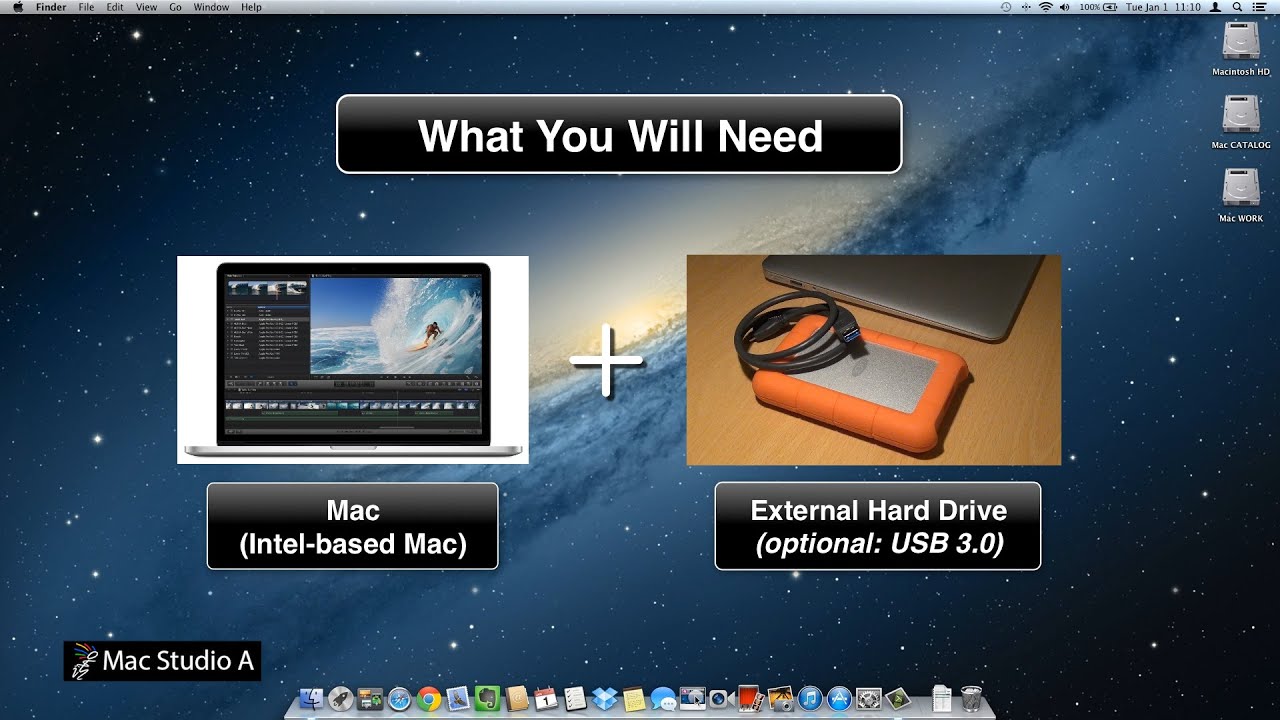
How to Create a Mac OS X Mountain Lion System Image File on Apple's Mac Intel Based Systems. SUBSCRIBE For More Videos Like This:http://goo.gl/88PNgx My MAIN Camera: https://amzn.to/2OBWusS External Dummy Battery for Camera: https://amzn.to/2RLgNGr Backup Power Bank I use: https://amzn.to/2RLe8MX ND Filter I use: https://amzn.to/2OyY8eI The Camera Mic I use: https://amzn.to/2JRjK5s My Lapel Mic: https://amzn.to/2JSE4mQ Must have Gadget for Recording HDMI Output: https://amzn.to/2Dslv93 Get those crisp overhead shots with this tripod: https://amzn.to/2PIOcnV Versatile Super Tripod Clamp: https://amzn.to/2DvXPk2 Mini Tripod I use: https://amzn.to/2PNePrx My iPhone Tripod Mount: https://amzn.to/2DvD8Vh LED Spot Lighting I use: https://amzn.to/2JSDZjd LED Wide Angle Lighting: https://amzn.to/2Dvuu9w My Scenery LED Kit: https://amzn.to/2DtVjKZ My Storage Devices For Video Editing SSD: https://amzn.to/2PMRhTD USB 3.0 SSD External Enclosure I use: https://amzn.to/2DvDoUf USB 3.0 Flash Drive I use: https://amzn.to/2SXu4wU My High Speed Camera Card: https://amzn.to/2Fanhxe External Storage Drive I use USB Version: https://amzn.to/2JUlWta External Storage Drive Thunderbolt & USB Version: https://amzn.to/2RIZ82c Recommended Gear: RAID Thunderbolt 3 External Hard Drive: https://amzn.to/2POl2Ul 2TB Thunderbolt and USB 3.0 Portable Hard Drive: https://amzn.to/2DvLX1u 4TB USB-C and USB 3.0 Portable Hard Drive: https://amzn.to/2JRzF3N 5TB Rugged Thunderbolt / USB-C Mobile Drive: https://amzn.to/2PNfzwP Variable Friction Magic Arm: https://amzn.to/2qEhJ3S Rode VideoMic Pro Plus: https://amzn.to/2yZ1Tp0 Follow me on: http://instagram.com/sergesiou https://twitter.com/SergeSiou Mac Mini iMac Mac Pro Xserve MacBook Air MacBook Pro (Works for: OS X Mountain Lion 10.8.2, 10.8.3, 10.8.4,10.8.5, OS X Mavericks 10.9 and OS X Yosemite) External Hard Drive used: LaCie Rugged 1TB RAW SCRIPT: What you will need: 1. A Mac (Intel based-Mac) 2. A Separate Internal and External Hard drive. (In our case, We'll be using a USB 3.0 External hard drive) Basically for a System Image Backup to work and do it's job effectively, you need to create it on a completely separate hard drive from the main Macintosh hard drive. The External hard drive can have separate partitions, as long as it has enough space to create a System image file. Consider reserving at least 100GB to start with on your Internal or External Hard drive. So in our case, we will be assuming that you will be using an external hard drive, As always, don't forget to back-up your hard drive or drive when ever using the Mac Disk Utility Application. To check what applications is currently on your Macintosh Hard drive, click on LaunchPad... Everything shown in the yellow box and any additional third-party applications that you install on your Mac system will be included on the Mac System Image that you create. As you can see some of the third party applications will be included on the Mac OS X System Image File, plus Applications from the Mac App Store, like GarageBand, iMovie and iPhoto. At this point, We'll insert our External USB External Hard drive, This is where the Mac OS X System Image will be copied too. Once loaded, We need to launch the Disk Utility application, click LaunchPad and go to the Other Folder, click Disk Utility to launch it, Now, on the Disk Utility Taskbar, Click File then scroll to New, Now scroll and click on "Disk image from Folder..." You will now be presented to Select the Folder to image which is basically the Macintosh HD. As I have many Hard drives and Partitions, I usually go to where all my Devices are as shown, which in my case is named "iSerge's Macbook Air" Now click on the Macintosh HD icon, then click the image button, We now need to give our image a name, I usually name them with the Date the image was created then choose where to copy the System Image too, in our case, it's our External USB Mac partitioned HD then click the down-arrow to expand the Mac External HD at this point, for easy cataloguing, we can create a folder where the image will be copied to, this is purely optional, I just do it for better cataloguing. In our case, I'll create one called "LatestMacImage" Once done...click on the Folder just created to make sure it's selected and click on the Save button, You will now be promoted to enter your Admin Details, do so and click the OK button, for the Image to start being created. We now need to "Scan Image for Restore", If you forget to do this, you will be prompted to do so when doing an actual System Image Restore. On the left-hand panel of the Disk Utility Window, click on the System Image File just created ("MacOSXImageDec222012.dmg"), Then go to the Disk Utility Taskbar and click on the "Images" tab, then scroll and click on "Scan Image for Restore..."
Create OS X Mountain Lion System Image File Part 2 - YouTube |
| 41 Likes | 41 Dislikes |
| 12,927 views views | 5,549 followers |
| Science & Technology | Upload TimePublished on 17 Feb 2013 |

Không có nhận xét nào:
Đăng nhận xét